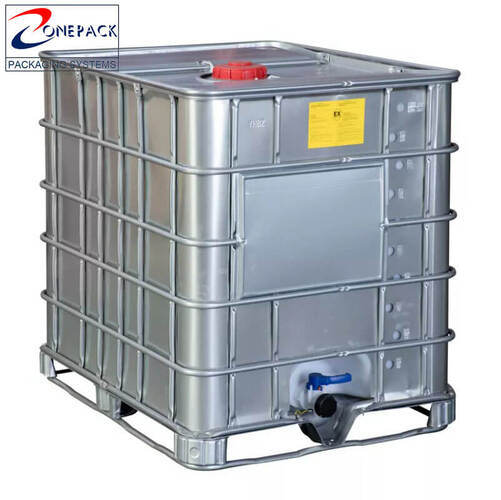
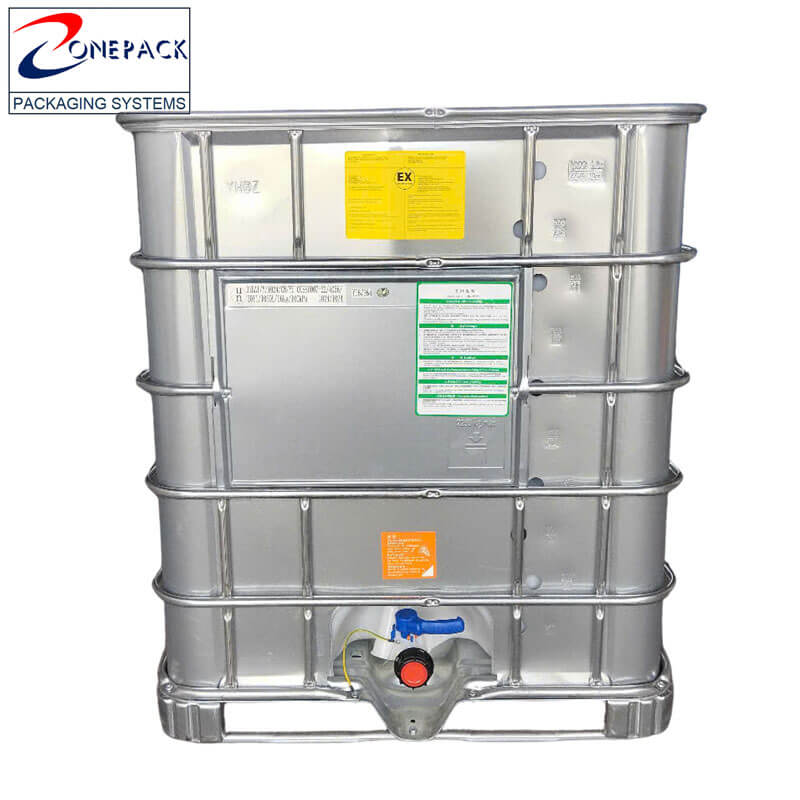
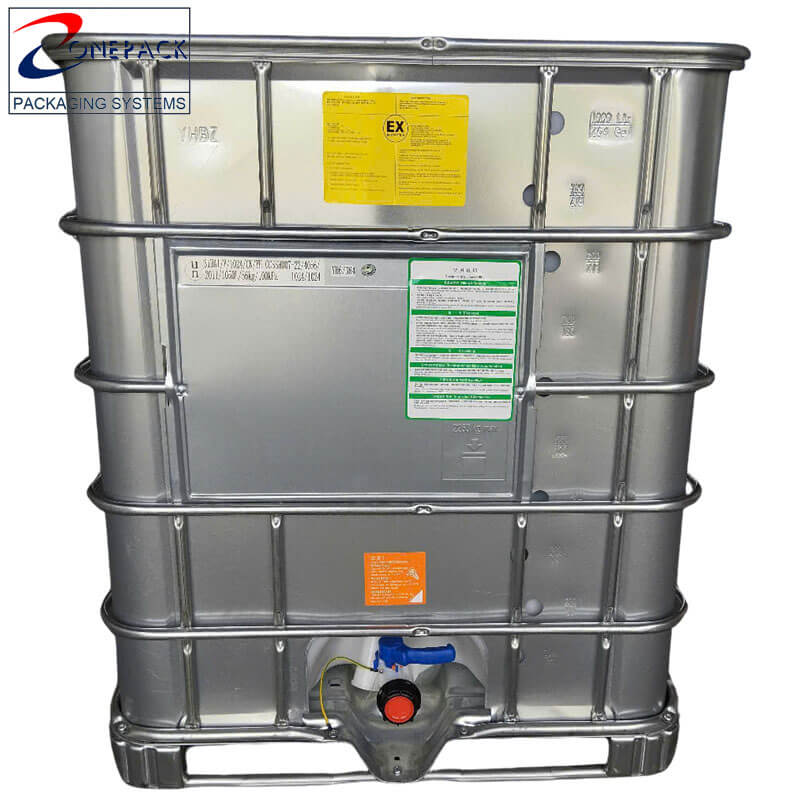
ATEX Explosion-Proof IBC Tank 1000L — For Flammable Solvents & Hazardous Liquids
Reviewed by David, Technical Advisor at Zonepack Vietnam
Updated: April 2026 | Topics: ATEX IBC tank, explosion-proof IBC, EX IBC tank Vietnam
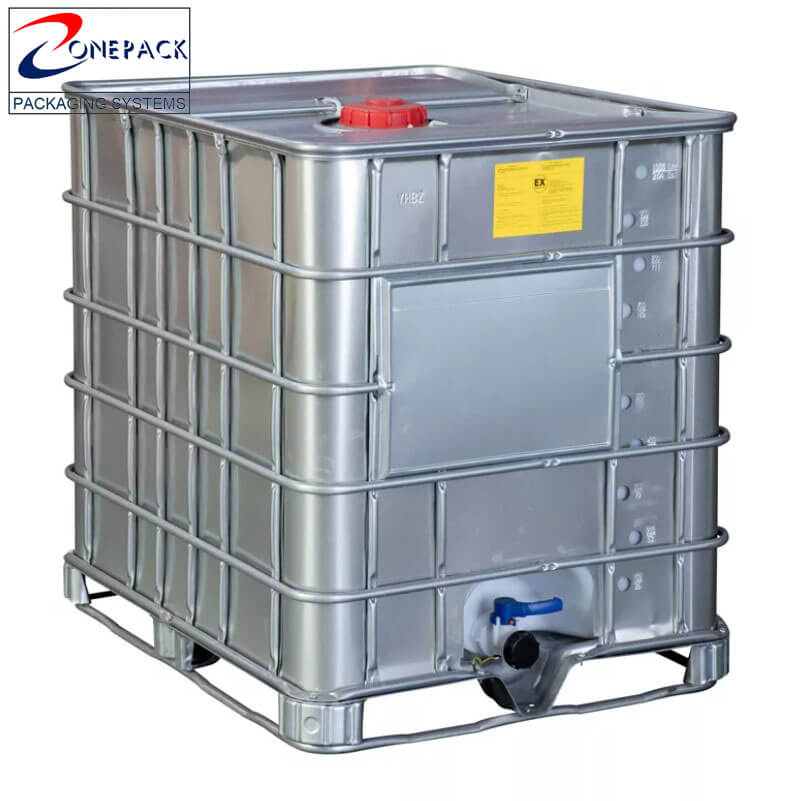
An ATEX explosion-proof IBC tank is a 1,000-litre bulk container designed for the safe storage and transport of flammable liquids — solvents, fuels, and chemicals with a flash point below 60°C. Unlike standard IBC tanks, the ATEX IBC features a conductive HDPE inner bottle and a grounded galvanized steel frame that dissipate static electricity, preventing ignition of flammable vapors during filling and dispensing. Zonepack Vietnam supplies ATEX explosion-proof IBC tanks in Binh Duong with fast delivery nationwide.
Why Static Electricity Is Dangerous With Flammable Liquids
When flammable liquids flow through pipes or are poured into containers, friction generates electrostatic charges. In a standard IBC tank with a non-conductive HDPE bottle, this charge accumulates until it discharges as a spark — potentially igniting flammable vapors above the liquid surface.
Flammable solvents commonly stored in IBC tanks have low flash points and wide explosive limits, making static discharge particularly dangerous:
| Solvent |
Flash point |
Explosive range |
| Acetone |
−18°C |
2.5–12.8% |
| Isopropyl alcohol (IPA) |
12°C |
2.0–12.7% |
| Ethanol (95%) |
13°C |
3.3–19.0% |
| Toluene |
4°C |
1.1–7.1% |
| MEK (methyl ethyl ketone) |
−9°C |
1.4–11.4% |
| Xylene |
27–32°C |
1.1–7.0% |
| Paint thinner |
typically 21–61°C |
varies by formulation |
For any liquid with a flash point below 60°C stored or dispensed in an industrial setting, ATEX-rated equipment — including ATEX IBC tanks — is required under international safety regulations (ATEX Directive 2014/34/EU, IEC/TS 60079-32-1:2013, TRGS 727:2016).
How the ATEX IBC Tank Prevents Static Ignition
The ATEX explosion-proof IBC tank addresses static hazard through three design elements:
- Conductive HDPE inner bottle — the bottle material is compounded with conductive additives, giving it a surface resistance that allows static charges to flow safely to the grounded steel frame rather than accumulating as a spark potential.
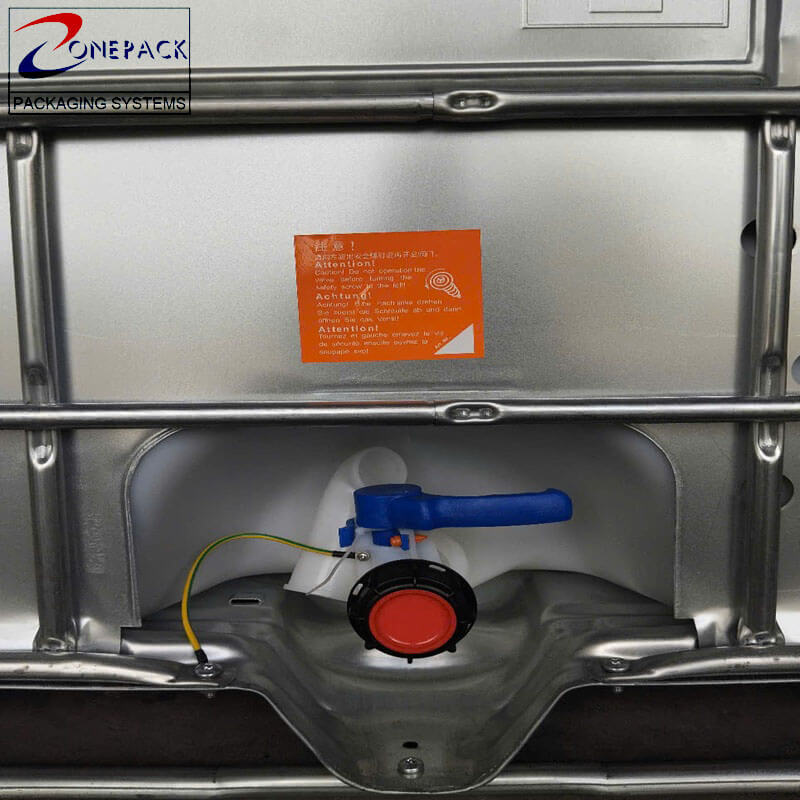
- Grounded galvanized steel frame — the steel cage provides the conductive path from the HDPE bottle to earth ground. A grounding lug is provided on the frame for connection to the facility earth bonding system.
- IIB-certified anti-static valve (DN50) — the outlet butterfly valve is constructed from conductive/anti-static materials, certified for use with IIB gas group substances (which includes most common industrial solvents).
Together, these three elements create a continuous conductive path from the liquid to earth — eliminating the static accumulation that causes spark discharge.
Product Specifications
| Specification |
Value |
| Capacity |
1,000 litres (nominal) / 1,050L maximum |
| Inner bottle material |
Conductive/anti-static HDPE |
| Outer frame |
Galvanized steel — provides grounding path |
| Base pallet |
Galvanized steel — four-way forklift access |
| Outlet valve |
DN50 anti-static butterfly valve — IIB certified |
| Filling opening |
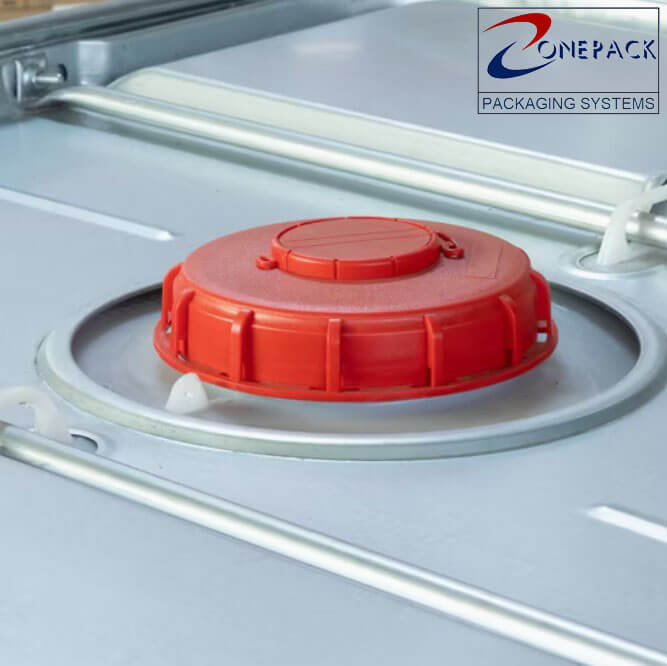
DN150 anti-static screw cap with vent valve |
| Dimensions (L × W × H) |
1,200 × 1,000 × 1,160 mm |
| Total weight (tare) |
73 ± 2 kg |
| UN certification |
UN31HA1/Y — hazardous liquid transport |
| ATEX compliance |
Zone 1 & Zone 2 classified areas |
| Electrostatic standard |
IEC/TS 60079-32-1:2013 & TRGS 727:2016 |
| IIB certification |
Valve & cap certified for IIB gas group |
| Maximum liquid density |
1.9 kg/L |
| Heavy metal content |
<100 ppm (Pb, Cd, Hg, Cr(VI)) |
ATEX Zone Classification — When Is This IBC Required?
| ATEX Zone |
Description |
IBC requirement |
| Zone 0 |
Explosive atmosphere continuously present (inside tank) |
Not applicable — IBC interior |
| Zone 1 |
Explosive atmosphere likely during normal operation |
ATEX IBC required |
| Zone 2 |
Explosive atmosphere unlikely, only in abnormal conditions |
ATEX IBC required |
| Non-hazardous |
No explosive atmosphere risk |
Standard IBC sufficient |
Practical rule: If your facility stores, handles, or dispenses liquids with a flash point below 60°C, ATEX Zone 1 or Zone 2 classification likely applies to at least part of your facility. Consult your EHS officer to confirm zone classification before selecting IBC tanks.
Applications
- Paint & coatings manufacturing — solvents, thinners, resin solutions
- Chemical processing — acetone, IPA, ethanol, MEK, xylene, toluene
- Pharmaceutical manufacturing — solvent-based API processes, cleaning solvents
- Printing & ink industry — solvent-based inks and cleaning agents
- Electronics manufacturing — IPA and solvent cleaning processes
- Adhesives & sealants — solvent-based adhesive raw materials
- Petroleum & fuel distribution — light petroleum fractions, fuel blending
How to Use an ATEX IBC Tank Safely
- Grounding before filling/dispensing — connect the grounding lug on the IBC frame to the facility earth bonding point using a bonding cable before opening the valve.
- Bonding to receiving/dispensing vessel — bond the IBC to the receiving container to equalize potential between the two vessels.
- Slow fill rate — for very low flash point liquids, use the lowest practical fill rate to minimize charge generation.
- No sparking tools near open valve — use non-sparking tools when working in ATEX Zone 1/2 areas.
- Store in ventilated area — prevent vapor accumulation around filled IBC tanks.
ATEX IBC vs Standard IBC — Side-by-Side Comparison
| Feature |
Standard IBC Tank |
ATEX IBC Tank |
| HDPE inner bottle |
Standard non-conductive HDPE |
Conductive/anti-static HDPE |
| Static discharge risk |
High — charge accumulates |
Eliminated — continuous grounding path |
| Outlet valve |
Standard butterfly/ball valve |
IIB anti-static certified valve |
| For flammable solvents |
NOT recommended / NOT compliant |
Required & compliant |
| ATEX Zone 1/2 use |
Non-compliant |
Fully compliant |
| Price |
Lower |
Higher (specialized components) |
| UN certification |
Yes |
Yes |
Frequently Asked Questions
What does ATEX mean on an IBC tank?
ATEX refers to the EU directive (2014/34/EU) governing equipment for use in potentially explosive atmospheres. An ATEX-rated IBC tank is certified for safe use in areas where flammable gas or vapor mixtures may be present — ATEX Zone 1 and Zone 2. The certification confirms the IBC will not generate ignition sources (sparks) from static electricity.
What is the difference between ATEX IBC and standard IBC for flammable liquids?
A standard IBC has a non-conductive HDPE bottle that accumulates static charge during filling and dispensing — creating a spark risk with flammable vapors. An ATEX IBC has a conductive HDPE bottle and grounded steel frame that eliminate this risk. Using a standard IBC for flammable solvents is non-compliant with ATEX and safety regulations.
Do I need an ATEX IBC for acetone, IPA, or ethanol storage?
Yes. Acetone, IPA (isopropyl alcohol), ethanol, toluene, MEK, and similar solvents have low flash points (below 60°C) and are classified as flammable liquids. Storage and handling in an industrial ATEX Zone 1/2 classified area requires ATEX-certified equipment including ATEX IBC tanks.
What is IIB certification on the ATEX IBC valve?
IIB is a gas group classification under IEC/ATEX standards. Group IIB covers most common industrial flammable gases and vapors, including ethylene, IPA, ethanol, and many solvents. An IIB-certified valve is designed and tested to not generate ignition energy capable of igniting IIB group vapors — more stringent than IIA certification.
Where can I buy ATEX explosion-proof IBC tanks in Vietnam?
Zonepack Vietnam supplies ATEX explosion-proof IBC tanks 1000L from our Binh Duong warehouse. Fast delivery to chemical plants, pharmaceutical facilities, and FDI factories in Binh Duong, Ho Chi Minh City, Dong Nai, and nationwide.
Need ATEX explosion-proof IBC tanks for your facility?
Zonepack Vietnam stocks ATEX IBC tanks 1000L in Binh Duong — conductive HDPE, IIB anti-static valve, UN certified. Our technical team will confirm ATEX Zone compliance for your specific solvent and application.
Call: +84 903 186 290 | Email: sales@zonepackvietnam.com | Request a quote →
Contact: sales@zonepackvietnam.com | +84 903 186 290
Specialist in ATEX safety compliance, explosion-proof packaging requirements, and flammable liquid storage regulations for chemical and manufacturing facilities in Vietnam.
— Technical Advisor, Zonepack Vietnam: David - Reviewed by